
Avengers: Doomsday Plot Theories — Ranked
Avengers: Doomsday
Plot Theories — Ranked
Marvel has revealed almost nothing about the plot. Here is every major fan theory, ranked from most grounded to purest speculation — with the supporting hints that make each one worth taking seriously.
When Marvel announced Robert Downey Jr. would return — not as Tony Stark, but as Doctor Doom — the internet collectively lost its mind. The Russo brothers are back directing. The X-Men are confirmed returning. Three distinct universes are colliding. And Marvel has told us almost nothing.
So the fans have done what fans do: they have built theories. Some of those theories are remarkably coherent, built on real MCU lore, confirmed casting, and years of comic book history. Others are exciting but loose. Below, we rank the six most prominent plot theories — grounded tier first, speculation last — with the supporting hints that give each theory its weight.
🎬 Official Marvel Teaser — All Heroes Return
The Theories — Ranked
Doctor Doom Is a Variant of Tony Stark
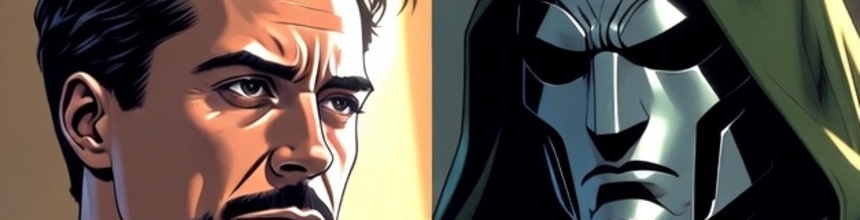
This is the most widely discussed theory — and for good reason. The casting of Robert Downey Jr. as Doom after a decade as Iron Man is too pointed to be coincidence. The MCU's own rules, established in Loki and What If...?, confirm that variants of the same person can look identical across universes.
The theory goes like this: Doom is a version of Tony Stark who never had his humbling crucible moments — no cave in Afghanistan, no Pepper, no Morgan, no arc reactor in his chest. Without those experiences that ground the MCU Tony, this variant became everything Tony's worst instincts wanted: arrogant, controlling, and convinced that he — and only he — has the intelligence to fix what others broke.
This also explains the emotional engine of the film. Imagine surviving Avengers — Rhodey, Steve Rogers, Pepper — looking into Doom's face and seeing Tony. That's not a gimmick. That's a narrative weapon.
- MCU variant rules (Loki, What If...?) explicitly allow identical-looking counterparts across universes.
- Thanos singled Tony out in Infinity War as uniquely "cursed with knowledge" — a trait Doom shares completely.
- RDJ has stated publicly he wanted a role that was "different enough" from Tony — a dark variant satisfies that artistically.
- The Russo brothers directed both Infinity War and Endgame, meaning they understand Tony's arc better than anyone. They would not waste this casting on a surface gimmick.
The Multiverse Is Already Collapsing — and Tony's Death Is the Cause
Incursions — universes physically colliding and annihilating each other — were introduced in Doctor Strange in the Multiverse of Madness. Deadpool & Wolverine expanded on the concept of "anchor beings": individuals so tied to their universe's identity that their death destabilizes the timeline around them.
The theory: Tony Stark's death in Endgame was Earth-616's anchor being event. It saved the universe in the short term but fractured the multiverse's stability in the long term — because the most important person in that reality sacrificed himself out of sequence. The cracks have been spreading ever since Endgame, through No Way Home, Multiverse of Madness, and now Doomsday.
Steve Rogers' decision to stay in the past with Peggy is also theorized as a contributing factor — branching the timeline deliberately in a way that has cascading consequences.
Doom positions himself as the only one willing to make the impossible choices to stop the collapse — much like Thanos did, but with greater intelligence and arguably more coherent logic.
- Incursions are confirmed MCU canon from Doctor Strange in the Multiverse of Madness.
- "Anchor being" is confirmed MCU terminology from Deadpool & Wolverine.
- The official synopsis mentions "heroes from three distinct universes on a deadly collision course" — which is incursion language.
- Steve Rogers is confirmed returning in the first teaser. His presence needs narrative justification — timeline instability gives it one.
Doom Is the Protagonist — The Film Follows His Perspective
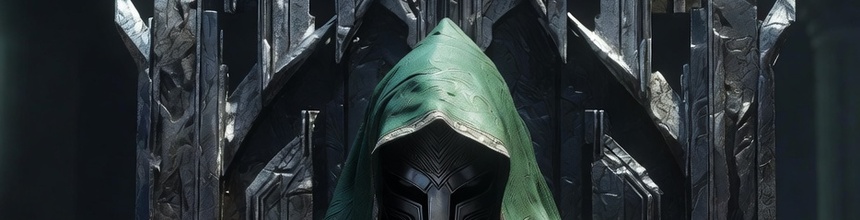
One of the most structurally bold predictions: Doomsday is Doom's movie, told primarily from his point of view — exactly the way Infinity War was Thanos' film. The heroes are obstacles, not protagonists.
In this framing, Doom is not a cackling villain. He is a man of absolute conviction who believes — and is often correct — that the world's chaos requires a single intelligence in control. His arc across the film involves acquiring power systematically, making brutal but logical decisions, and ultimately positioning himself as the necessary evil that the heroes cannot bring themselves to be.
Marketing imagery has suggested Doom physically defeating Thanos — possibly tearing the Mad Titan's spine out — as an early power statement. This would establish immediately that Doom is not simply "the next Thanos." He is on a different level, and the film's dramatic question is not whether the heroes can beat him physically, but whether they can out-think him morally.
- The Russo brothers structured Infinity War around Thanos' perspective — they have precedent and preference for villain-led narratives.
- In comics, Doctor Doom has functioned as anti-hero, protagonist, and even God Emperor — he is not simply a "bad guy."
- RDJ's casting requires substantial screen time to justify. A Thanos-style protagonist role explains the investment.
- The official synopsis says "existential threat unlike anything they've ever encountered" — existential threats require complex motivations, not simple evil.
🎬 Steve Rogers Will Return — Official Marvel Teaser
Franklin Richards Is the Key — Doom Wants the Ultimate Power

Introduced in The Fantastic Four: First Steps, young Franklin Richards possesses reality-warping powers that in the comics are considered among the most dangerous in existence — he can create fully functional pocket universes. In Secret Wars comics, it is Franklin who provides Doom with the raw creative power to become God Emperor of the patchwork world called Battleworld.
The theory: Doom's central goal in Doomsday is to acquire Franklin — not out of cruelty, but because Franklin's powers are the only force capable of either stabilizing the collapsing multiverse or creating a new singular reality from its remnants. Doom frames this as stewardship. The Fantastic Four — and eventually all the heroes — see it as a child being weaponized by a tyrant.
This sets up Secret Wars perfectly: Doom wins partial control by the end of Doomsday, and the sequel deals with the consequences of a universe remade according to his vision.
- Franklin Richards is confirmed in The Fantastic Four: First Steps, which Marvel president Kevin Feige confirmed leads directly into Doomsday.
- In the Secret Wars comics, Franklin Richards' power is the literal foundation of Doom's new world — the film's sequel is named Secret Wars.
- The Fantastic Four cast (Ebon Moss-Bachrach as the Thing, etc.) is confirmed in Doomsday — they would not be present unless their family is at the center of the conflict.
- Marvel rarely introduces a character with unique powers without using those powers as a plot mechanism within 1-2 films.
Avengers vs. X-Men Before They Unite Against Doom
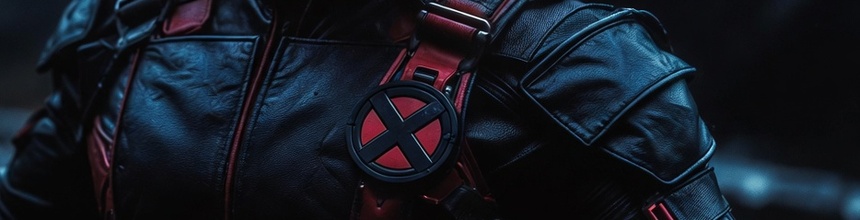
With legacy X-Men actors confirmed returning — Patrick Stewart as Professor X, Ian McKellen as Magneto, James Marsden as Cyclops — this is not really a theory anymore. The X-Men are in this film, coming from a different universe. The heroes from different realities meeting will produce conflict before cooperation. This is both dramatically necessary and structurally expected from the Russo brothers' playbook.
The more specific theory: the MCU Avengers and the Fox-universe X-Men have fundamentally incompatible world-views at first contact. Mutants have lived in a world that feared and hunted them. Avengers have operated as celebrated public heroes. That friction does not dissolve immediately just because Doom shows up. It creates a multi-faction crisis that Doom may actively be exploiting — keeping the heroes divided while he moves toward his goal.
- Patrick Stewart, Ian McKellen, and James Marsden are all confirmed in the cast — this is not rumor.
- The official synopsis explicitly states "heroes from three distinct universes" — conflict between them is logically inevitable.
- The Russo brothers used hero vs. hero conflict in Civil War to devastating effect. They would use it here.
- Doom classically exploits divisions among heroes — it is one of his defining tactical traits in the comics.
The Heroes Let Doom Win — The Lesser Evil Argument

This is the most morally provocative theory, and the loosest in terms of hard evidence. The idea: Doctor Strange, Reed Richards, or a secret group of elites (a "Council of Reeds" or Illuminati-type organization) conclude that Doom's plan — though authoritarian — is the only functional solution to total multiversal collapse. So they do not stop him. They let him win. They may even help him.
The emotional weight would be immense: heroes choosing surrender to a tyrant because the alternative is the end of everything. It sets up Secret Wars as a resistance story against a reality that was deliberately handed over.
The reason this ranks last: it requires complex setup that has not been confirmed, and it risks being too similar to the "let Thanos win" structure of Infinity War. The Russos are smart enough to avoid straight repetition. Still — as a thematic thread within a larger plot, it has real power.
- The Illuminati (secret group of elites managing multiversal threats) was introduced in Multiverse of Madness — the concept exists in MCU canon.
- Doctor Strange has shown willingness to make morally catastrophic sacrifices when the math demands it.
- Reed Richards variants (Council of Reeds) appear in the comics as a group that makes exactly this kind of cold, utilitarian decision.
- The sequel being named Secret Wars — which in comics involves a resistance against Doom's God Emperor rule — implies Doom succeeds in some form by the end of Doomsday.
🎬 The X-Men Will Return — Official Marvel Teaser
Final Word
What separates a good fan theory from noise is not how exciting it sounds — it is how well it fits the lore, the casting decisions, and the storytelling patterns of the people making it. The Doom-as-Stark-variant theory and the multiverse collapse theory stand above the rest because they are grounded in confirmed MCU mechanics and the Russo brothers' demonstrated narrative instincts.
The truth is, Marvel could surprise everyone. They usually do. But these theories give you a framework to watch the film with — and a checklist to tick off when the credits roll.
Avengers: Doomsday hits theaters on:
December 18, 2026
Comments (0)
Be the first to comment.
Leave a comment