
Dark is not as deep as it thinks it is

Opinion · TV Criticism
Dark is not as deep as it thinks it is
Netflix's German sci-fi series is ambitious, intricately constructed, and — in one crucial way — philosophically dishonest with itself.
Let me be clear before the inevitable backlash begins: Dark is a good show. The puzzle construction across its first two seasons is genuinely impressive. The score is oppressive in exactly the right way. The way characters across four generations and three timelines interlock is, at times, extraordinary. I watched all of it.
But good is not the same as great. And the near-perfect scores Dark receives on every aggregator suggest that a lot of viewers have confused atmosphere for profundity, and ambition for execution. Two criticisms stand out — one about tone, one about fundamental logic.
The tone problem: Winden's personal drama dressed as mankind's last stand
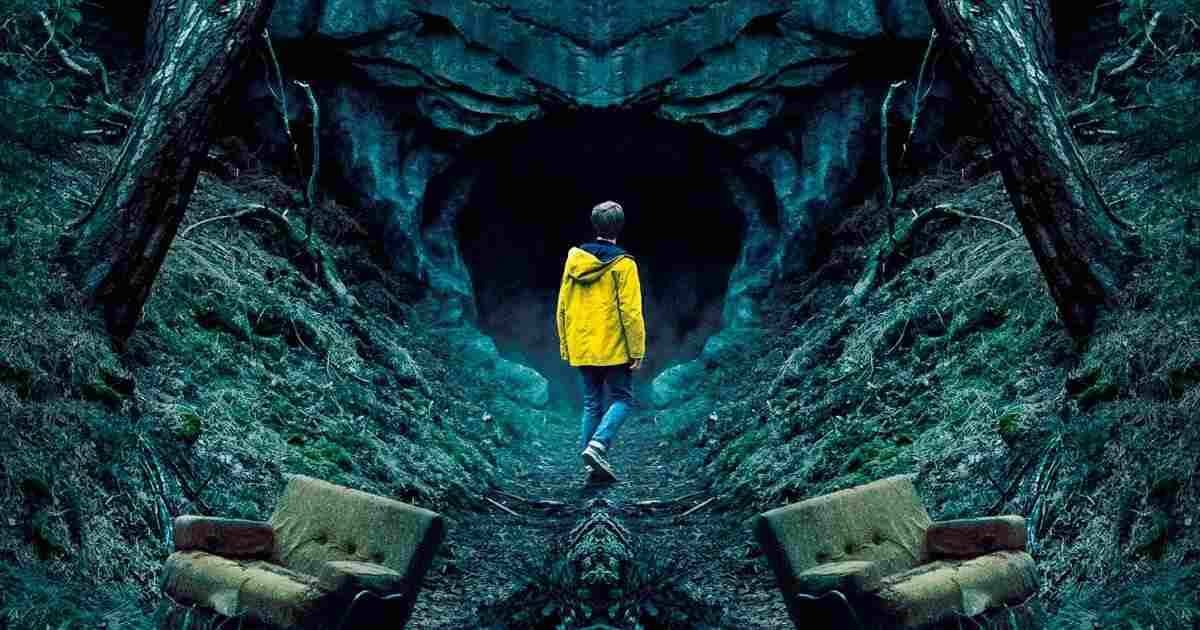
Here is something Dark never wants you to think about: while the Kahnwald and Nielsen families are brooding in the rain, delivering cryptic monologues, and treating every conversation like a death row confession — the rest of the world is absolutely fine. People in Berlin are going to work. Paris is having a normal Tuesday. No one outside of one small German town with a nuclear power plant and poor parenting has any idea anything unusual is happening.
This is not a criticism of the scale. Stories do not need to be global to matter. A family drama set in one house can be devastating. The problem is that Dark's writing does not treat its story like a family drama. It treats it like the fall of civilisation — and the gap between what is actually happening and how the show presents it becomes, over time, genuinely exhausting.
Consider how characters actually talk in this show. Nobody says "I need to tell you something important." They say things like: "The beginning is the end and the end is the beginning." Nobody says "I am worried about what happens next." They stare into the middle distance, let ten seconds pass, and whisper something about time being a knot. Fathers do not have difficult conversations with their children — they deliver philosophical verdicts with the energy of a man who has seen three civilisations crumble.
This would be defensible if the show used it selectively. A single character who speaks this way reads as eccentric or damaged. Every single character speaking this way, in every single conversation, including ones about fairly mundane family matters, starts to feel like a writing tic masquerading as a worldview.
The urgency is the other problem. Characters move through the show with the desperation of people trying to prevent a nuclear war. And technically, yes, there is an apocalypse coming — but it is an apocalypse that affects exactly one town, that most characters in the world will never hear about, and that is ultimately caused by those same characters trying to prevent it. The show wants you to feel the weight of this as though humanity's fate hangs in the balance. It does not. A few families in Winden are trapped in a loop of their own making, and the script insists on treating this with the solemnity reserved for actual extinction events.
The irony is that the actual premise — people trapped by determinism, unable to escape the consequences of choices that were never really theirs — is genuinely tragic and does not need to be oversold. The tragedy sells itself. But Dark does not trust that. It underlines, italicises, and puts in bold. It adds the rain and the slow zoom and the orchestral swell, just to make sure you understand this is significant. A more confident show would let the situation breathe and trust the audience to feel the weight without being constantly instructed to feel it.

Dark's atmosphere is real. The question is whether it earns what it implies — or just insists on it.
The logic problem: which timeline theory did you pick?
This is the more serious criticism. To understand it, you need a brief detour into how time travel stories actually work — because most viewers treat the different models as interchangeable when they are not.
There are three fundamentally different frameworks that writers use when constructing a time travel narrative. Each has its own internal logic, and each produces a completely different kind of story. Mixing them is not a stylistic choice — it is a logical contradiction.
The three models of time travel storytelling
Model one
Fixed timeline
The past cannot be changed. Whatever you do when you travel back has always happened. There is one single timeline, and your actions are already baked into it. Paradoxes are impossible because everything is predetermined.
Examples: Timecrimes, Predestination, 12 Monkeys
Model two
Changeable timeline
The past can be altered. Traveling back and doing something different creates a new version of events. The future is malleable. Choices matter and consequences can be undone.
Examples: Back to the Future, Looper, The Butterfly Effect
Model three
Many worlds / branching
Each alteration creates an entirely new parallel timeline rather than overwriting the original. Both versions continue to exist. You are not changing your past — you are branching into a new reality.
Examples: Avengers: Endgame, Everything Everywhere, Dark Matter
These are not just different flavors of the same idea. They are philosophically incompatible. A story that operates on fixed timeline logic cannot suddenly switch to changeable timeline logic without breaking its own internal rules. It is like a chess game where the rules of checkers are introduced in the final move.
Now here is the problem with Dark.
Seasons one and two are a textbook fixed timeline story. Every attempt by Jonas to prevent the apocalypse causes it. He becomes the Stranger who becomes Adam — the very person responsible for the catastrophe he is trying to stop. The logic is airtight and the show commits to it completely. Nothing can be changed. Everything that has happened was always going to happen. The loop is closed.

Fixed timelines have no branching paths. That is the entire point.
Then comes Season 3. The finale introduces Claudia's argument: that there exists an "origin world" — a world outside the knot, outside the loop — from which the entire causal chain can be unmade. Jonas and Martha travel there, prevent the accident that started everything, and the loop ceases to exist. Characters who were products of the loop are erased from existence. Closure is achieved.
This is changeable timeline logic. The past is altered. Causality is undone. The future is rewritten.
The show tries to justify this by designating the origin world as operating under different rules — it is outside the loop, so the fixed-timeline constraints supposedly do not apply. But this justification is never established in advance. The show invents the distinction in Season 3 to solve a problem that its own logic created. That is not clever writing — that is retroactive rule-bending.
If you commit to a fixed timeline, the only honest ending is one that stays within those constraints. You cannot "fix" a predetermined universe, because fixing implies things could have gone differently — which is exactly what a fixed timeline denies. Dark wants the intellectual credibility of determinism and the emotional satisfaction of free will. It cannot have both without cheating. In Season 3, it cheats.
What Dark actually gets right
The puzzle architecture of the first two seasons is genuinely extraordinary. The way the show tracks characters across decades, the way every answer generates a new question, the visual and musical coherence — all of it is exceptional. If you engage with it as an intricate mystery, it rewards close attention.
The show also does something rare: it makes the audience feel the weight of determinism. When you understand that every character is already trapped, that Jonas's suffering is his destiny and always was, there is something genuinely tragic about it. That emotional effect is real and earned.
Final verdict
Dark is a good show that wants desperately to be a masterpiece. The ambition is real, the craft in its first two seasons is impressive, and the emotional core is genuine. But a tone that mistakes solemnity for profundity, and a finale that quietly abandons its own philosophical framework to manufacture a satisfying ending, keep it well short of the near-perfect status it has been given. Watch it — but do not let the atmosphere convince you it is deeper than it is.
Comments (0)
Be the first to comment.
Leave a comment