
Godzilla vs Hulk: Peak Versions — An Honest Powerscaling Breakdown
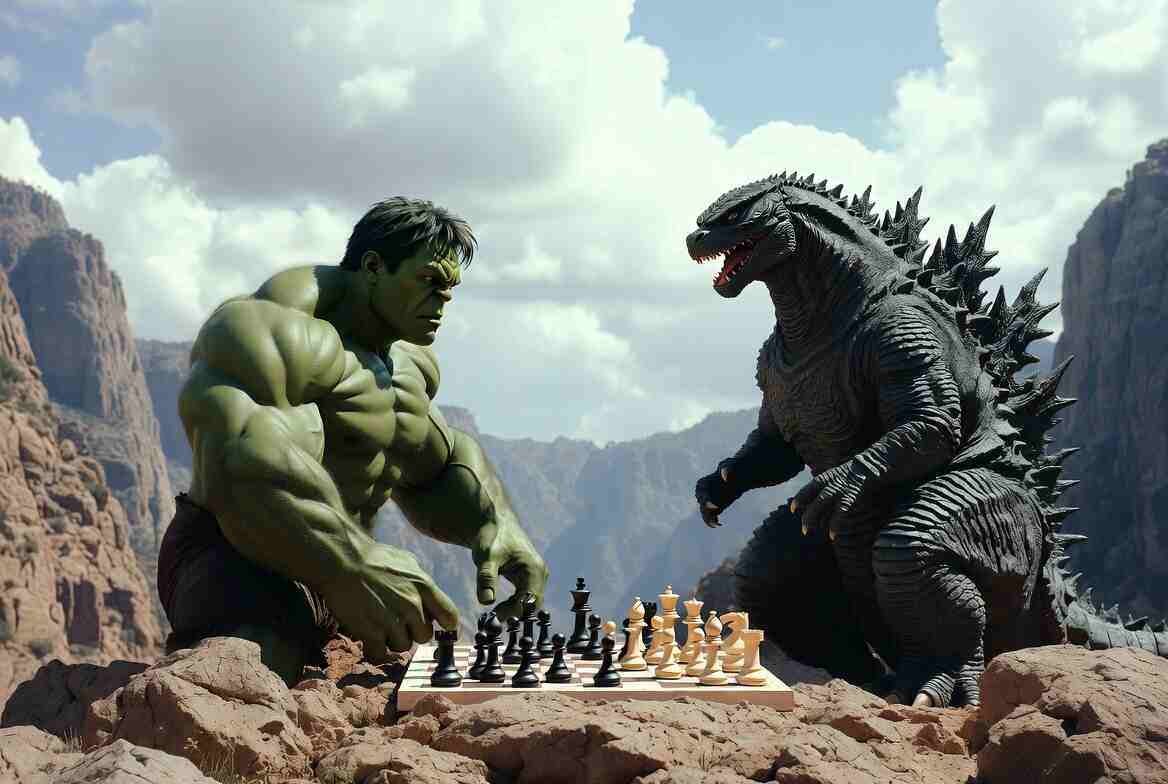
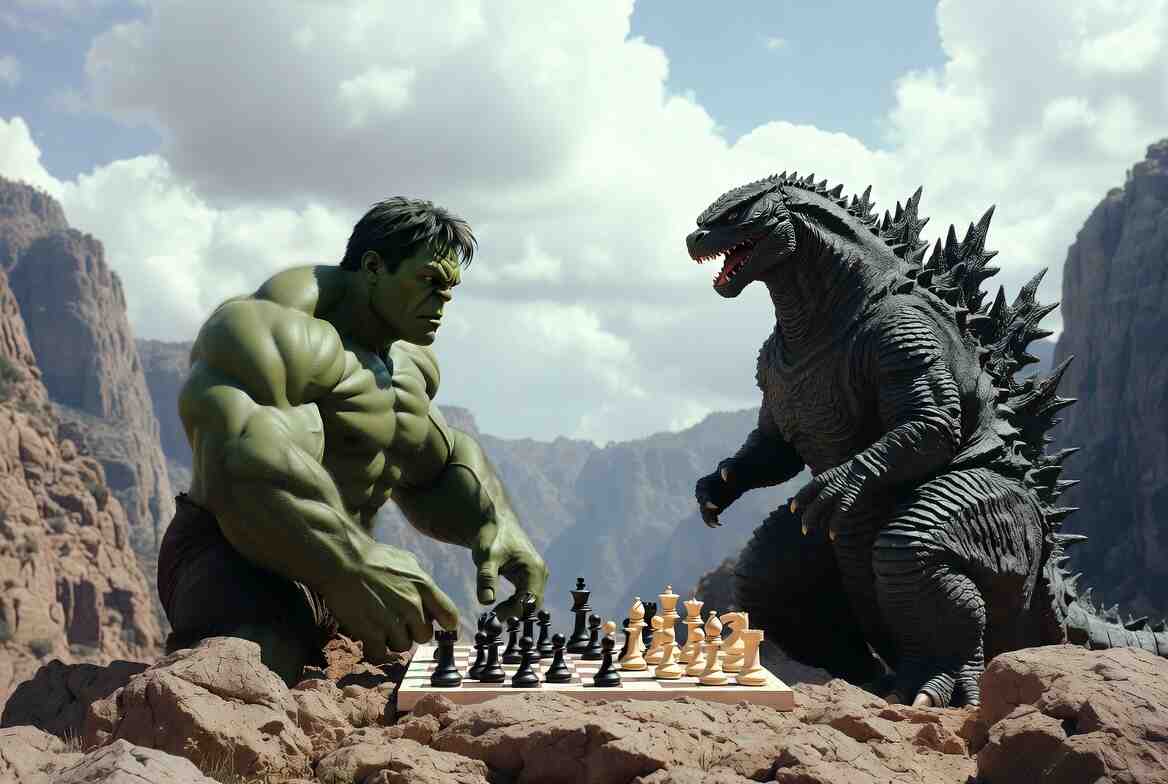
Godzilla
vs
Hulk
Comparing the absolute ceiling versions — honestly, with the source material’s limitations on the table.
When people argue about peak Godzilla vs. peak Hulk, two things usually go wrong simultaneously: the feats get inflated beyond what the panels actually show, and the two characters get compared as if they come from equally codified power systems. They do not. Saying that upfront is not a concession to either fanbase — it is the only intellectually honest way to run this argument.
This piece picks the highest, most cosmically ambitious version of each character, states clearly what the source material actually supports, and delivers a verdict with appropriate confidence — no more, no less.
Ground Rules: How We Are Reading the Evidence
Godzilla and Hulk come from different creative traditions with different relationships to internal consistency. Marvel’s cosmic hierarchy is explicitly structured by editorial intent — characters are positioned relative to each other with deliberate, documented scaling. IDW’s Godzilla lore is more impressionistic and symbolic, particularly in the In Hell miniseries, which is largely wordless and abstract by design.
This means the two sides are not equally measurable. Where Hulk’s cosmic feats have editorial scaffolding behind them, Godzilla’s most ambitious feats require interpretive reading of symbolic imagery. We will note this difference wherever it matters — not to dismiss Godzilla, but because pretending both sides are equally documented is exactly how powerscaling arguments collapse into fan fiction.
All feats described below reflect what the source material reasonably supports — not the most flattering possible reading of ambiguous panels.
Why These Versions — and Not Others
The choice of “peak” is itself an argument, so it needs justifying before anything else.
For Godzilla: Godzilla Earth (the 2018 animated trilogy) is the physically largest version ever depicted, at 300 metres, but tops out at continental-scale destruction — nowhere near cosmic. Heisei Burning Godzilla is a meltdown state: powerful, but self-destructive and mortal by design. Keizer Godzilla (Final Wars) has the strongest combat record in Toho film canon but remains firmly planetary. None of these operate outside physical reality. Only IDW Godzilla In Hell places the character in a genuinely metaphysical environment — surviving dimensional obliteration, reforming from hellfire matter, forcing his way out of an underworld dimension through will alone. That makes it the only reasonable pick for a cosmic-tier comparison.
For Hulk: World Breaker Hulk is planet-level. Maestro is powerful but not cosmically scaled. TOBA Hulk from Al Ewing’s Immortal Hulk is the clear consensus peak — explicitly positioned within Marvel’s documented cosmic hierarchy as a vessel for the dark counterpart to the supreme deity.

Godzilla — IDW “In Hell” (2015)
The IDW miniseries sends Godzilla through layered infernal dimensions — surreal, largely wordless, and deliberately abstract. He endures conceptual obliteration, reforms from hellfire matter, and exits the underworld through sheer will. No other Godzilla version operates in this register.
What the source material firmly supports: survival of dimensional-scale obliteration, reconstitution from metaphysical matter, and forcing his way out of an afterlife dimension through will alone. Impressive — and genuinely unique in Godzilla’s history. Not as cleanly measurable as the fan summaries suggest.

Hulk — The One Below All (Immortal Hulk, 2018–2021)
Al Ewing’s Immortal Hulk is one of the most carefully constructed cosmic horror runs in recent Marvel history. At its climax, Bruce Banner’s body becomes a vessel for The One Below All (TOBA) — the dark mirror to the One Above All, embodying anti-creation at the end of the Ninth Cosmos.
This is positioned explicitly within Marvel’s documented cosmic hierarchy. End-of-cosmos confrontations with Galactus and Franklin Richards are depicted on-panel with clear narrative context. The regeneration mechanic via the Green Door is explicitly stated in-text — not inferred from symbolic imagery.
Matchup Analysis
| Attribute | Godzilla (IDW In Hell) | Hulk (TOBA / Immortal) | Edge |
|---|---|---|---|
| Raw Strength | Continental to dimensional — demonstrated against environmental and metaphysical threats | Multiversal — functions as the engine of a cosmic cycle’s end within Marvel’s explicit hierarchy | Hulk |
| Durability | Survived conceptual obliteration; reformed from hellfire-matter through will alone | Unaffected by universe-level energy; all damage routes through the metaphysical Below-Place | Hulk (better documented) |
| Energy Projection | Divinely-charged atomic breath — high point-of-contact lethality, on-panel demonstrated | Cosmic gamma bursts — vast area effect, systemic rather than concentrated | Godzilla (lethality per strike) |
| Regeneration | Soul-based resurrection — reforms after total physical destruction via will | Green Door mechanism — physical death routes immediately to metaphysical regeneration | Tie |
| Scaling Reliability | IDW lore is abstract and non-hierarchical — feats require interpretive reading of symbolic imagery | Marvel’s cosmic hierarchy explicitly positions TOBA as the dark counterpart to the supreme deity | Hulk (verifiable framework) |
| Cosmic Ceiling | Operates outside physical reality — unique in Godzilla’s history, but scale is ambiguous | Positioned at the end of a multiverse cycle within a defined, documented editorial structure | Hulk |
| “Divine Kill” Claims | Symbolic panel interpretation — not literal, codified, on-panel confirmation | End-of-cosmos confrontations — metaphysical and open-ended, not clean decisive kills | Both overstated — treat with caution |
How the Fight Plays Out
-
01
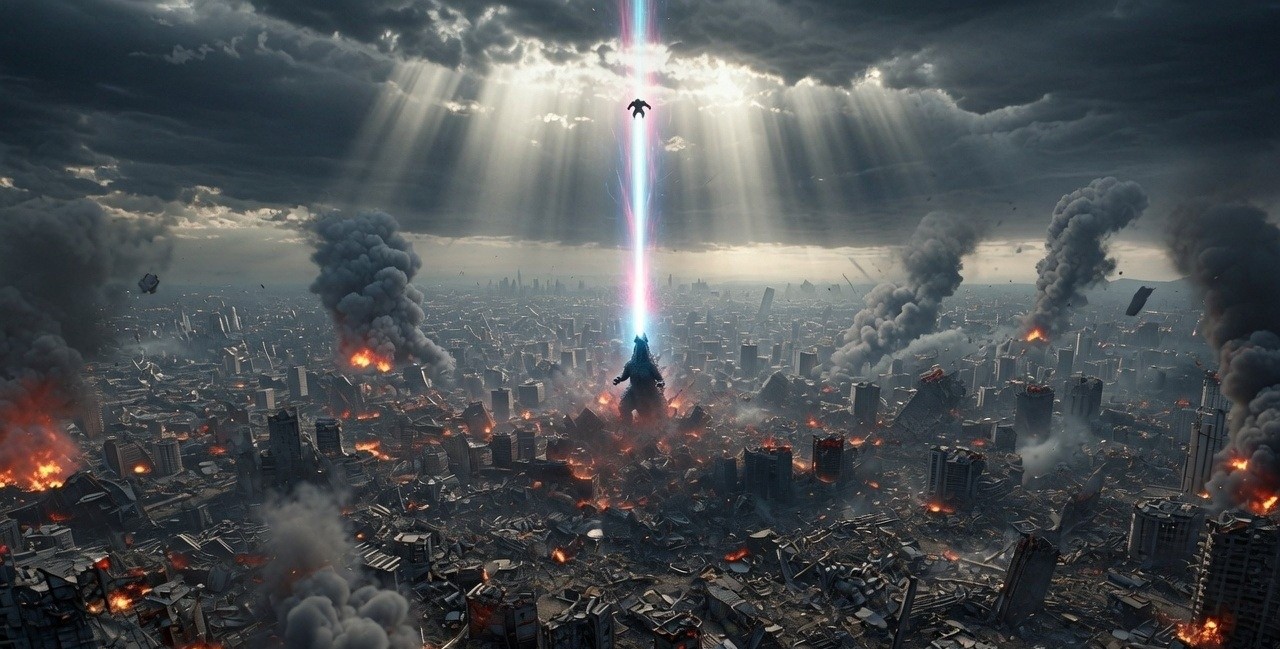
Opening Contact — The Physical World Ends Immediately The moment these two meet at their peak states, any planet beneath them is irrelevant. A single exchange between TOBA Hulk’s cosmic-fuelled mass and Godzilla’s reinforced frame transfers enough energy to reduce a world to debris. Neither is fighting on a planet at this scale — they are the event itself.
-
02
Energy Exchange — Atomic Fire Against the Gamma Void Godzilla’s divinely-charged atomic breath is the most concentrated offensive tool in this matchup. It would genuinely threaten Hulk’s physical form, burning through it significantly. But the Green Door mechanic is explicit in the text: destroyed flesh regenerates through the Below-Place. Godzilla’s strongest attack causes real damage — it does not cause a lasting wound.
-
03
The Conceptual Stalemate — Temporarily Both entities can survive the destruction of their physical forms. Godzilla reconstitutes from hell-matter; Hulk returns through the Below-Place. This pushes the fight from a physical brawl into a war of attrition between two metaphysical forces. At this stage the fight is genuinely close — two entities that cannot be permanently destroyed, colliding across dimensional space.
-
04
Scale Diverges — And Does Not Converge Again TOBA Hulk’s power source is explicitly the end of a multiverse cycle — a defined, editorially-documented structure. IDW Godzilla’s metaphysical ceiling is real, but ambiguous in scope. In a war of attrition between conceptual forces, the one drawing from a larger and more clearly defined reservoir has a structural advantage that compounds over time. Godzilla cannot outlast something that is literally the mechanism of universal entropy.
TOBA Hulk wins this argument — not because his feat list sounds more impressive, but because his power is anchored in a coherent, explicitly-structured cosmic hierarchy with documented editorial intent behind it. The One Below All is positioned as the dark mirror to Marvel’s supreme deity. That is a verifiable framework, not an interpretation of symbolic imagery.
IDW Godzilla In Hell is genuinely extraordinary. The resilience, the refusal to be contained by any underworld, the reconstitution from metaphysical matter through sheer will — these are traits no other Godzilla version possesses, and he belongs in this conversation. The problem is that his ceiling is ambiguous where Hulk’s is defined.
In a war of attrition between two entities that cannot be permanently destroyed, the one drawing from a more clearly-documented and structurally-larger power source wins. That is Hulk — narrowly, honestly, and with full acknowledgement that the Godzilla side carries genuine uncertainty.
Final Thought
The Limits of This Argument
Any powerscaling piece — including this one — is making interpretive choices under uncertainty. The honest verdict: Hulk, on the available evidence, with meaningful uncertainty about the Godzilla side of the ledger.
Godzilla and Hulk come from different creative traditions. IDW does not build power hierarchies the way Marvel does, and that is not a flaw in Godzilla’s storytelling. It reflects a different philosophy of what monster fiction is for. Godzilla was never meant to be measured. Hulk, in Ewing’s run, explicitly was.
Anyone telling you the result is certain in either direction is selling you a tidier story than the source material supports. A fight that destroys the universe and grinds toward a metaphysical stalemate is, frankly, the more honest outcome — and probably closer to what either character’s best writers would actually put on the page.
Comments (0)
Be the first to comment.
Leave a comment