
Bonolota Sen Review: A Search for Peace, Poetry, and the Tragedy of Jibanananda Das
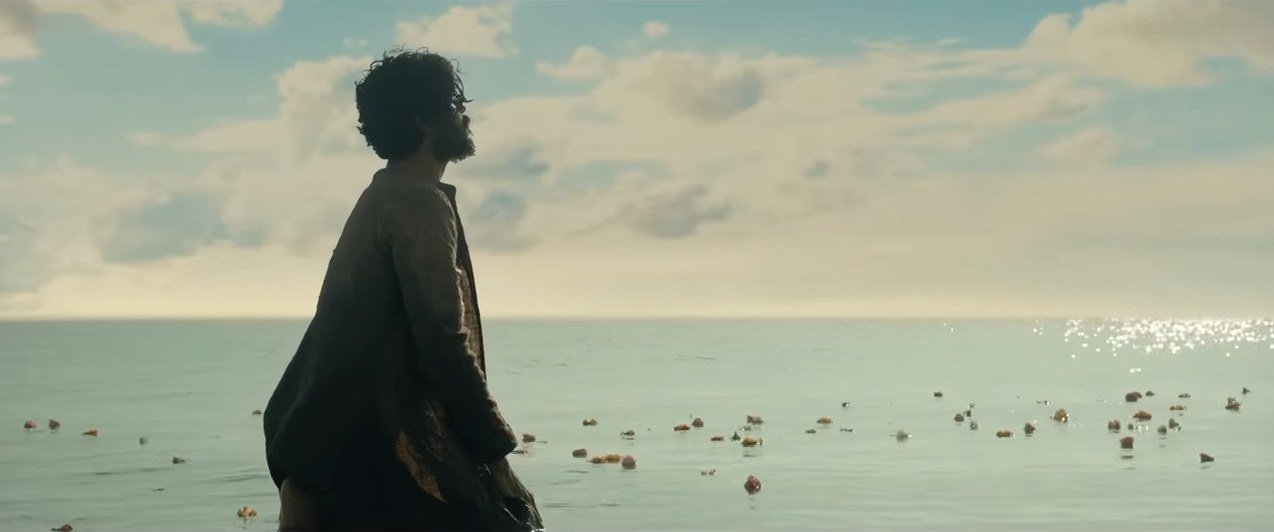

I watched Bonolota Sen as the second and final movie of Eid. Before going in, I had already decided — good or bad, I would watch this one in the theatre. The sole reason: Masud Hasan Ujjal. Those who follow Bangla films and dramas don't need an introduction to what kind of artist he is. Especially his drama Je Jibon Foringer will remain a legend in the world of Bangla television.
So does that mean we should watch anything Ujjal makes with our eyes closed? No. I was going to watch this movie because of a specific statement he made. He spent 10 to 12 years studying Jibanananda Das and his work — and even then, he believed that wasn't enough. When a man with that kind of thought process makes a film about Jibanananda, not going to see it would be a disservice.
The Intent
The primary subject of this movie is not Jibanananda Das. You read that right. The film doesn't orbit around Jibanananda — it orbits around Bonolota Sen. It is an exploration, a search for who Bonolota Sen is. The story goes as far as that journey takes it. Only as much of the poet as the story requires has been brought in. Once you understand this intention of the director, enjoying the film becomes considerably easier.
Acting
Everyone who appeared in this film did their job well — from Khairul Basar and Masuma Akter Nabila to the actors in smaller roles, everyone was well-suited to their parts. But one person towered above the rest: Sohel Mondal as Mohin. Just as the character of Mohin carried the story forward throughout, Sohel carried the film on his shoulders. An outstanding performance. Exactly what was needed — not less, not more. Absolutely perfect.
Music
There was only one song in the film. And that song properly represents a poem. I mean - properly. Translating poetry into visuals is not easy, and with Jibanananda Das's poetry, it becomes even harder. The poem Aat Bochor Ager Ekdin comes alive in the song Ekhane Keu Nei, rendered beautifully through Bappa Majumdar's vocals and placed with great care within the film. As for the background score, there isn't much to discuss separately — it blended seamlessly with the film and didn't harm the experience. Though there was perhaps room for it to do more.
Official Trailer
Visuals
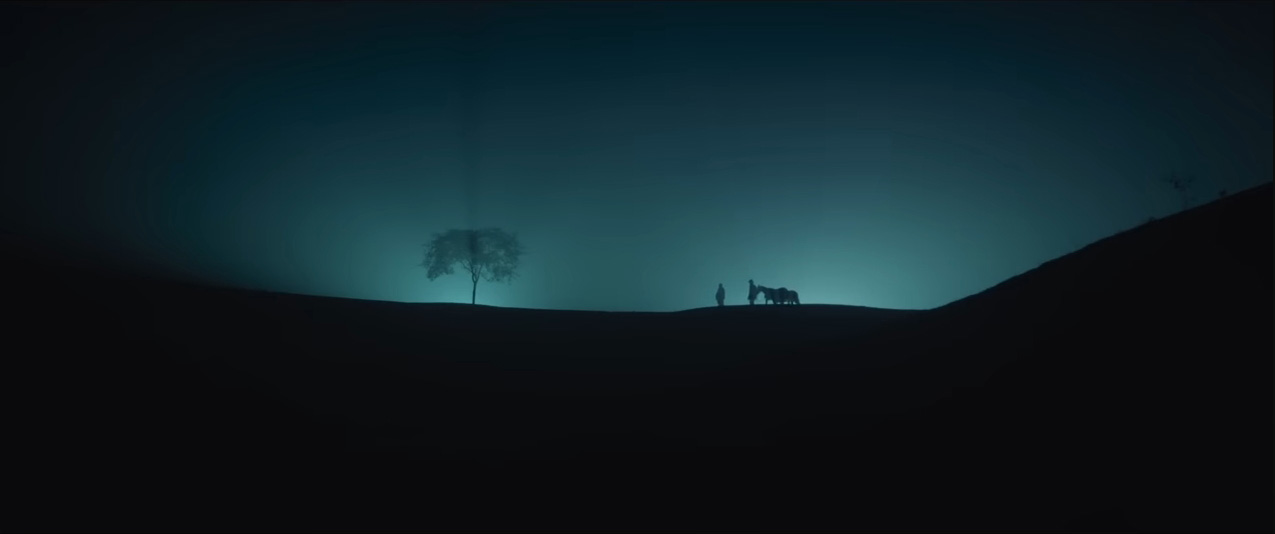
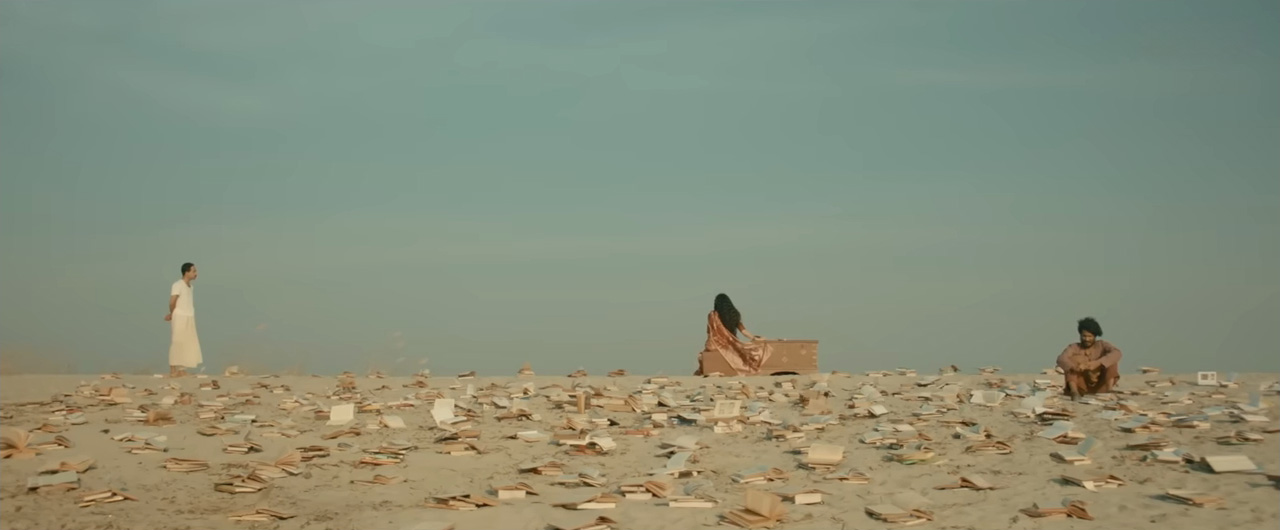
Designing shots set in 1930s Bengal — or earlier — is no small task. Throughout the film, it was clear that this was a world contemporary to Jibanananda, and it never felt forced or artificially imposed. There were some extraordinary scenes, executed with remarkable finesse.
On VFX — the director's intent was honest. Where possible, real sets were used. Where that wasn't feasible, VFX stepped in. Before commenting negatively, one has to consider the budget. Given what they had to work with, I'm not sure there's much room for complaint.
A Few Other Things
The character of Labanya Debi — Jibanananda's wife — may have been done a slight injustice in this film. She is portrayed as an unsupportive partner. That framing perhaps deserves more nuance. Yes, one should support a poet — but a woman who earned a graduate degree in 1930, who couldn't feed herself, who couldn't meet the basic needs of her children, had every right to her grievances. After all, you can't cook literature and eat it.
After the poet's death, when Labanya Debi asks this question — it might trigger you. But before reacting, it's worth asking why she would say something like that. Who Bonolota Sen is may be an important question, but perhaps for Labanya Debi, this question carries even greater weight. Whether this reflects a certain bias on Ujjal's part is a question worth sitting with.
The Experience
Even if you don't catch the subtle or overt references, if you simply follow the story, you'll have a genuinely good experience. Even if you haven't read the poem behind the film's only song, you won't feel lost — the narrative carries you. And if you have read it, well, it's all the more rewarding.
It goes without saying that going to watch a film about Jibanananda with at least a little prior reading is worthwhile. This film was made with considerable research, goodwill, and effort — and that is visible in every frame, from beginning to end.
I believe Mohin in this film is actually the director himself. Or perhaps more accurately: Mohin represents everyone who has spent years, decades, searching for Jibanananda or Bonolota. And Bonolota Sen is left as an open-ended question. My own reading is this: whoever or whatever gives you two moments of peace — that is your Bonolota Sen.
Talking about Jibanananda, there is nothing feel-good about it. When he died, he died as a failure. Jibanananda Das was a tragedy. The film shows this by laying him out at what resembles the table of the Last Supper. A man who was given no value in life, only to be used by many others, for many purposes, after his death. Perhaps half the titles in Bangla literature come from lines of his poetry.
We are part of that tragedy too. When Sohel Mondal's character goes to a lawyer and says, "Write down the names of all the guilty" — we wait to hear who will be named. His wife? His first love? Rabindranath? The printing press owner?
And then Sohel breaks the fourth wall, looks directly at the audience, and says: "Write down everyone's names, one by one." And we see our own names on the list of the accused. That is a remarkable scene.
The greatest irony life played on Jibanananda was in the very act of giving him his gifts. Nature gave him talent but not the ability to sell it. No fame, no wealth, no decent livelihood, no peace at home. He received nothing before he died. And the cruelest joke of all is embedded in his very name: Jibanananda — meaning the joy of life. He had neither the life nor the joy.
After his death, we honour him with films, talk shows, articles. None of it reaches the poet anymore. But if even one creative person benefits from this — that is more than enough.
Final Words
That is why I went to see this film in a theatre. A creative person spent 10 to 12 years studying Jibanananda and made a film. Even if you plan to criticise it, you should watch it — so that he finds the courage to attempt something like this again.
Though when I went to buy tickets, I found it had already been pulled from Sony Square. I eventually got tickets at SKS. The multiplex operators can't entirely be blamed — halls show what people will watch. But perhaps it's on us to decide what we actually want to watch.

Comments (0)
Be the first to comment.
Leave a comment